Category: Blog

Marijuana Reform

Currently, the Department of Veterans Affairs does not allow doctors to even discuss the use of medical marijuana to veterans irrespective of state law legalizing medicinal marijuana use. Lawmakers in Illinois and New York that have legalized medical marijuana are urging changes to current policy in order for VA doctors to use modern medicine treatment options for veterans suffering from PTSD.

Nearly half of the states across the United States have passed laws allowing marijuana to be used for medicinal purposes. Despite state action, marijuana still continues to be prohibited under federal law.

Since 1970, the federal government has categorized marijuana as the most dangerous type of drug: a Schedule I controlled substance. Schedule I is defined as drugs with no currently accepted medical use, high potential for abuse, and high risk of dependence. However, commonly known medicinal marijuana benefits include reduced pain and anxiety, treatment of conditions including seizures, PTSD, chemotherapy-induced nausea, glaucoma, AIDS wasting syndrome, neuropathic pain, multiple sclerosis, and insomnia.

Regardless of doctors recommending marijuana to combat negative health effects, the federal government continues to categorize it as a Schedule I controlled substance along with heroin, ecstasy, and LSD.

In 2011, the Drug Enforcement Administration (DEA) denied categorizing marijuana as a Schedule II drug because there has not been enough research on the drug. Recently, in December 2015, the Food and Drug Administration (FDA) recommended that marijuana’s classification be changed.

Currently, marijuana requires an excessively strict process for approved research. The FDA requires researchers to be approved as an Investigational New Drug (IND), which renders the drug safe and effective for their intended use. Additionally, the DEA must review the application and issue special licensure and registration because of its classification as a Schedule I controlled substance. Lastly, the National Institute on Drug Abuse (NIDA) is responsible for supplying the research grade marijuana to the approved researchers.

The FDA’s lack of approved research rests on their claim that the purity and potency of the drug may vary considerably. Although NIDA requires strict testing and compliance for any FDA approved marijuana research, states are lacking in uniformity of testing procedures.

The FDA wants the potency levels for using marijuana well defined so that patients and doctors may control the exact dose. Recently, new mechanisms for testing potency have been developed, but certain states only require some of the cannabinoids to be tested. For example, in Connecticut every production facility is required to test only THC and CBD levels, but the other cannabinoids are not being tested.

The FDA also wants the purity of marijuana to be ensured. Medicinal marijuana is prescribed to people who suffer from some adverse health condition; the patients are not typical healthy individuals with strong immune systems. Thus, there is a need for marijuana to be free of E Coli, pesticides, and mold. Despite this, states continue to lack uniformity in testing purity.            In California, for example, the grower or the dispensary facility may test the marijuana. This may result in growers selling unclean marijuana to distributers. Conversely, in Connecticut, every production facility must have every strain and every product tested to ensure the marijuana is clean.

Although medicinal marijuana dispensaries provide information and individualized consultations, uniform testing, research, and amended laws governing such practices are necessary to fully understand the effects of marijuana.
Tragedy Strikes Clinical Trial

By: Nawa Arsala

A volunteer participating in a clinical trial in France died last week, while five more remain hospitalized in critical condition. On January 17th, the Portuguese company Bial conducting the trial issued a press release confirming the death of the volunteer at the University Hospital of Rennes, while the remaining five could be permanently disabled due to neurological damage.

The drug being tested, which has been referred to as BIA 10-2474, is a painkiller meant to treat anxiety and motor disorders. A major public health issuing plaguing the United States today is addiction to pain relief drugs, therefore, there is a great need for non-addictive drugs in this therapeutic area. Study-provided documents explained that the drug in development was for “the treatment of different medical conditions from anxiety to Parkinson’s disease, but also for the treatment of chronic pain of sclerosis, cancer, hypertension or the treatment of obesity.”

The drug was intended to work on the body’s endogenous cannabinoid system, which deals with pain. Simply put, the drug should have stimulated the same receptors as the active components of marijuana. Bial believes that the drug has the potential to reduce pain and anxiety, among other neurological conditions. Earlier reports said the drug was related to cannabis, but Bial maintains that it does not contain cannabis or cannabis extracts.

The trial was run by the clinical research organization, Biotrial. Clinical research or contract research organizations, provide support and various services for pharmaceutical companies through various stages of drug development. In this case, the French company Biotrial ran the Phase I trial. In the European Union, this stage is the first time the drug is tested in humans. Generally during this stage, trials are conducted on healthy volunteers and are intended to see how the body responds to various dosages of the drug. As this trial began in July, it is likely this accident could have been a result of an increased dosage. This phase is not intended to test the effectiveness of the drug, but rather to see if there are any side effects. Phase II is intended to test for effectiveness, and Phase III increases the volunteer pool and compares the effectiveness to a placebo. In this case, 90 volunteers were given the drug. All of the volunteers were men, ranging from 28 to 49 years old. Further, there were an additional 38 volunteers who received placebo, which is considered highly unusual in a Phase 1 trial, since the purpose is to test safety, not effectiveness.

The trial has been suspended and the Paris prosecutor’s office has opened an investigation. The health minister of France Marisol Touraine said she has “no knowledge of a comparable event.” Bioethicists around the world have called into questions the consent of the volunteers.  The most vital aspect of human research is the ability for the volunteer to give informed consent. As many volunteers in clinical trials are compensated, many Phase I volunteers could be poor and easily exploited, as ascertained by bioethicist Carl Elliott.

The tragedy in Paris was truly unprecedented. With countless diseases vying for medications, the clinical trial process is vital for innovation. Although lives were lost in this instance, volunteers in clinical trials have saved innumerable of lives throughout history.

Telemedicine: Regulatory Framework & Barriers to Expansion

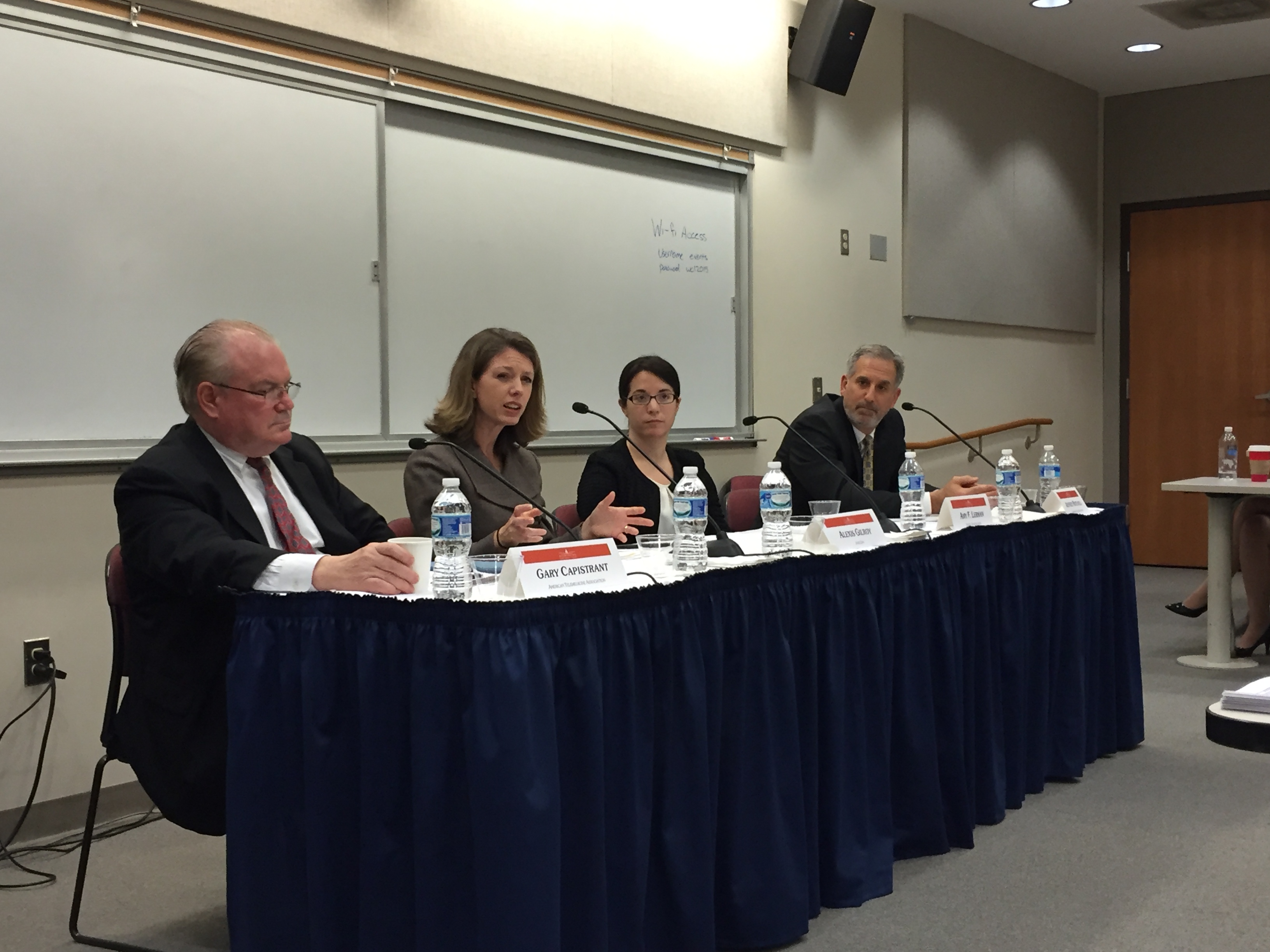
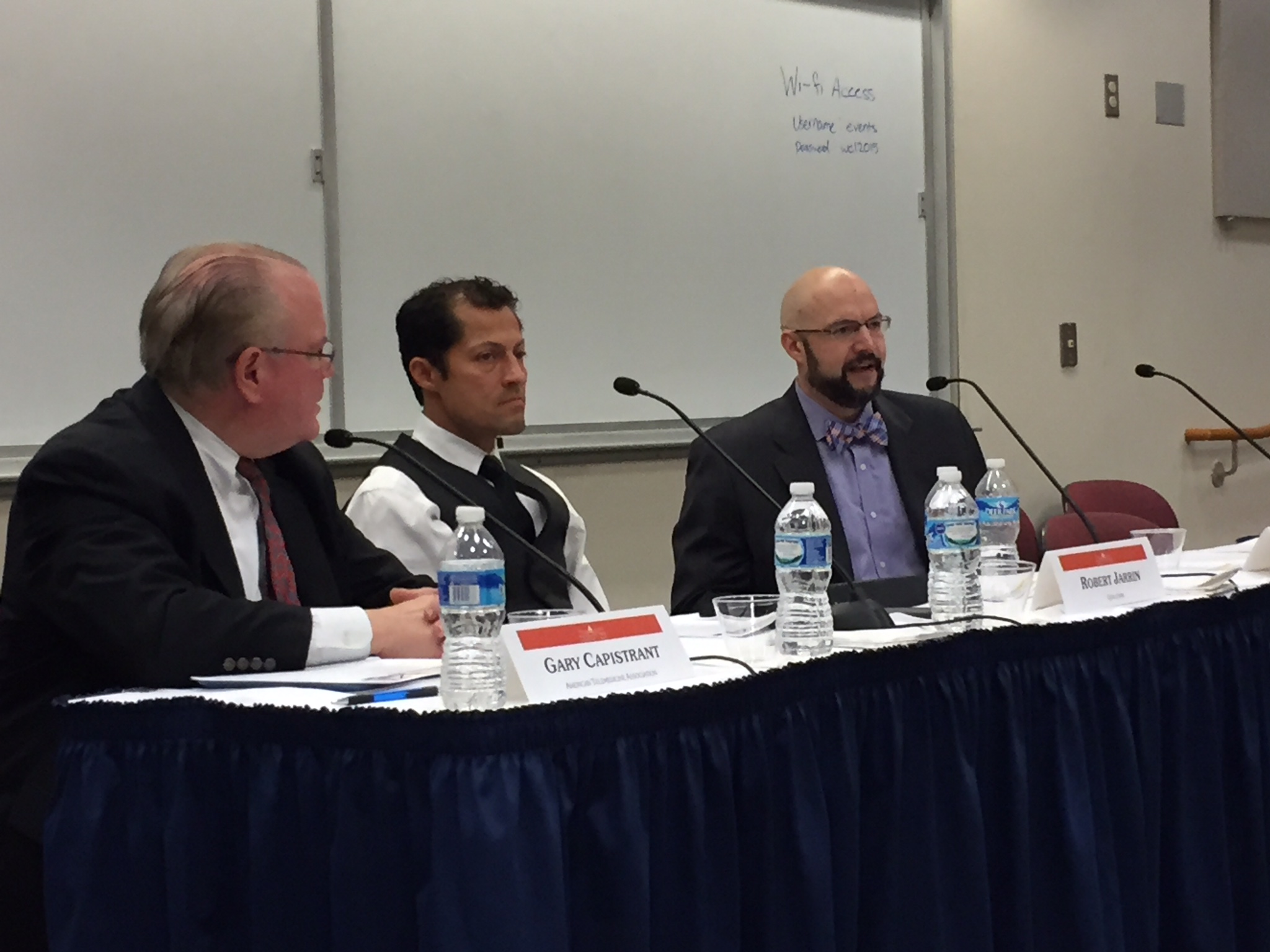
On November 19, the Health Law and Policy Brief hosted its fall symposium “Telemedicine: Regulatory Framework & Barriers to Expansion.” Telemedicine emerged over 40 years ago and is a rapidly expanding area of healthcare in the United States. The panelists at the symposium discussed the current state of Telemedicine, its regulatory framework, and the barriers to its expansion. Mr. Gary Capistrant, the Chief Policy Advisor to the Telemedicine Association, moderated the panels.

The first panel focused on barriers to the expansion of telemedicine. The speakers on the panel were 1) Ms. Alexis Gilroy, Partner at Jones Day; 2) Ms. Amy F. Lerman, Senior Counsel at Epstein Becker Green; and 3) Mr. Jeffrey Mitchell, Of Counsel at Lukas Nace Gutierrez & Sachs LLP.

These three speakers brought up and discussed several important barriers that need to be addressed for telemedicine to reach its full potential. Ms. Alexis Gilroy emphasized that regulation of telemedicine is state by state. Regulators are dealing with a huge number of rules that vary, and there is yet another layer of regulation once telemedicine moves outside of the United States. In some ways, regulators can supervise telemedicine more directly, but varying rules complicate that. A potential solution is to create a federal system of regulation, but that would take away power from states, which raises another host of issues. Ms. Amy Lerman focused on barriers regarding payment. The question from all telemedicine clients is how they are going to get paid. The various state regulatory regimes also have varying reimbursement schemes, which seriously hinder telemedicine, which cannot move forward if they are not paid. Finally, Mr. Jeffrey Mitchell questioned the idea of “universal service.” While technology has made magnificent advances in the last two decades, there is still the problem of affordable access to phones and the Internet in rural areas, which are usually in greater need of telemedicine. Even if rural areas do have access to phones and the Internet, connectivity is constantly an issue. A solution is to subsidize rural phones by overcharging urban businesses, however that comes with its own problems that have yet to be adequately addressed.

The second panel focused on how the federal government regulates mHealth devices. The speakers on this panel were 1) Mr. Daniel Gottlieb, Associate at Epstein Becker Green; and 2) Mr. Robert Jarrin, Senior Director of Government Affairs at Qualcomm.

Both of these speakers built upon the comments of the speakers on the first panel and further elucidated how involved the government is in regulating telemedicine. Mr. Daniel Gottlieb described the various ways that the federal government regulates mHealth devices. Mr. Gottlieb began by applauding telemedicine saying that clinical data obtained through its programs has immense potential to spur medical advances. He explained that clinical and IT personnel collaborate in telemedicine programs. The Department of Health and Human Services (HHS), the Food and Drug Administration (FDA), and the Federal Communications Commission (FCC) then regulate their efforts. If certain programs work with patients in the European Union (EU), they then also must comply with the EU Data Privacy Directive. His points echoed those of Ms. Gilroy. While careful regulation is necessary for safety purposes, Mr. Gottlieb emphasized a need to streamline the regulation of telemedicine. Mr. Jarrin’s points reiterated the fact that there are several regulatory bodies involved in telemedicine. As the Senior Director of Government Affairs for Qualcomm, Mr. Jarrin emphasized that he is responsible for 1) state and federal laws pertaining to telemedicine; 2) FDA regulatory oversight over mHealth devices; 3) congressional committees’ perspectives; 4) Medicare and Medicaid telehealth reimbursement; and 5) FCC broadband healthcare efforts. Compounding these responsibilities is how much of a risk a device is. The FDA classifies devices in different groups based on risk; however determining risk is a complicated process. Mr. Jarrin called for more guidance and transparency from government agencies, particularly the FDA.

The symposium was a wonderful event, and the AUWCL community was incredibly lucky to have such knowledgeable speakers come and offer their expertise.


IMG_0961 IMG_9003

Even with the ACA, is healthcare in America bankrupting its citizens?

A recent New York Times/Kaiser Family Foundation survey found that 1 in 5 insured American’s struggle to pay medical related expenses. On March 23, 2010, President Obama signed the Affordable Care Act, which enacted comprehensive health care reform. The massive law contains countless provisions, with some of the most controversial and contested being the individual and employer mandates. Due in part to the mandates, decreased costs of yearly/monthly premiums, and restrictions on denying coverage for pre-existing conditions, the uninsured rate has dropped 6 percent, from 15.1 percent to 9.2 percent, since the ACA was enacted. Despite the impressive increase in insured American’s, the new NY Times/Kaiser study suggests that insuring more Americans is only one part of solving America’s mounting healthcare problems.

The study suggests that many Americans are taking second jobs, working longer hours, or cutting back on household expenses to pay the costs of medical treatment not covered by their insurance. Margot Sanger-Katz, in a NY Times article summarizing the study, suggests that although insurance premiums are lower, the lower premiums are offset by higher deductibles. The article highlights several examples of Americans that were blindsided by unexpected medical bills, including one individual who lost her home due to extensive medical costs despite being insured. Is there any solution to this growing problem? President Obama’s administration is constantly battling attacks on the ACA. Given Congress’ recent attempt to repeal portions of the ACA, which President Obama not surprisingly repealed on Friday, January 8th , it seems unlikely that Congress will pass any additional legislation to further regulate the insurance industry. What relief do Americans have when it seems that the only way to avoid medical debt is to stay healthy?

The Huffington Post suggests that the situation is not so bleak for at least some sectors of the population. “The data from the Centers for Disease Control and Prevention show that the number of people in households that faced problems paying medical bills decreased by 12 million from the first half of 2011 through the first six months of this year.” The data further suggests that “among the poor, the share of those with problems fell from 32.1 percent to 24.5 percent,” which is an even more significant decrease in problems than their middle-class counterparts.

With the uninsured rate at historic lows, and still many Americans struggling to make ends meet while receiving needed medical treatments, additional health care reform seems necessary. However, given the current political landscape and Congress’ overwhelming disdain for health care reform introduced by the current administration, it seems unlikely that much-needed change will occur. Where does that leave American’s who are facing the life-changing decision of depleting hard-earned savings to have a fighting chance at treatment, surgery or recovery? A recent article from the Las Vegas Review Journal suggests negotiating upfront with hospitals for fair rates can help control mounting medical expenses. However, more often than not, staying healthy is the best way to avoid medical debt and keep hard-earned money in the bank.


Supreme Court Denial of Stay Means Minimum Wage, Overtime Pay for Home Health Aides

For the first time since Congress passed FLSA in 1938, home health aides, also known as domestic service workers, are now eligible for minimum wage and overtime pay. Earlier this month, Chief Justice Roberts denied Home Care Association of America’s request for stay of issuance of mandate in the case Home Care Association of America v. Weil.

Home Care Association made waves across the labor law and health care industry this past August when the D.C. Circuit Court upheld Department of Labor (DOL) regulations that extend minimum wage and overtime protections to home health aides. Home Care Association may still appeal, but legal experts muse that even if the appeal is granted, it is unlikely to prevail.

Labor activists heralded the decision as a momentous occasion for the domestic work industry. The home health aide industry encompasses nearly two million domestic workers—and expanding. It is the fastest-growing occupation in the nation. Domestic workers typically operate behind closed doors in a highly unregulated economy with little workplace protections. As a result, labor trafficking and exploitation are consistent concerns in the industry.

In the decades since its inception in 1938, the Fair Labor Standards Act (FLSA) has left out home care aides and exempted them from wage-and-hour requirements. Some labor activities charge that the exemption is driven by racism against a class of workers largely composed of immigrants and women of color. The FLSA exemption meant that employers were not required to pay domestic workers minimum wage or compensate them for working overtime. The D.C. Circuit Court decision sweeps domestic workers under FLSA—and thereby formalizes the work of a sector that has been historically overlooked.

The Home Care Rule went back into effect on November 12, 2015. Between now and December 31, 2015, the DOL is adopting a relaxed enforcement policy. In a policy statement, the DOL said that it will “exercise prosecutorial discretion” during this period. When making decisions as to whether to bring enforcement actions, the DOL will consider the extent to which States and other entities have “made good faith efforts to bring their home care programs into compliance” with the Home Care ruling. DOL will commence more rigorous enforcement in 2016.

The ease-in period buys more time as home health organizations and hospitals make adjustments. A common source of complaint and frustration is funding. Institutions funded by payers like Medicare and Medicaid are still at a loss as to how they will accommodate the overtime pay mandates into their budgets. In the first industry-led report since the D.C. Circuit Court decision, several membership associations released a set of recommendations outlining potential next-steps for home health providers. The report cautioned states from reacting adversely, such as prohibiting all overtime hours. It also suggested that home health institutions work with state legislators to make more room in their state budgets for home health aide payments.

The D.C. Circuit Court decision is clearly a win for labor rights activities and domestic workers. But with budgetary challenges and a potential Supreme Court appeal on the line, whether and to what extent the Home Care rule will be enforced remain to be seen.

Fracking Creates Pregnancy Risk

This October the Johns Hopkins Bloomberg School of Public Health released a study linking fracking to adverse pregnancy outcomes, specifically premature births. Fracking, also known as hydraulic fracturing, is the “process of pumping chemical-laced water into shale to extract the oil or gas embedded within.” Fracking is a stimulation process used to access natural gas located 5,000-8,000 feet below the surface that was previously unavailable.

The study found that living within the most active area of fracking (most active quartile of drilling and production) activity was associated with a 40% increase in a woman giving birth prematurely (preterm is considered to be before 37 weeks gestation) and a 30% increase that an obstetrician had labeled their pregnancy high-risk. Of the pregnancies in the study 11% of those resulted in a premature birth with 79% of those preterm births taking place between 32 and 36 weeks.

Premature birth is a serious public health problem because it increases the risk of death and serious disability for children who are born prematurely. Children born prematurely may suffer from numerous health complications including breathing problems, feeding difficulties, cerebral palsy, developmental delay, vision problems, and hearing impairment. Preterm birth is the greatest contributor to infant death and the leading cause of long-term neurological disabilities in children. In 2010, preterm-related deaths accounted for 35% of all infant deaths and in 2005 preterm births cost the U.S. healthcare system 26 billion dollars.

The practice of fracking is a controversial topic for many reasons including other public health dangers fracking might be related to and the potential long-term environmental impact it might have. Preliminary studies conducted on births in Pennsylvania report an increased risk for low birth weight, which can be a sign of developmental problems. A Yale University study found that people living near natural gas wells are more than twice as likely to have respiratory illnesses and skin problems. There is also preliminary research suggesting that fracking is related to water pollution.

Additionally, fracking is a public health concern because its use and prevalence has rapidly expanded in the United States when much is still unknown about the dangers and long-term effects. The process of fracking dates back as early as the 1940s, while large scale use did not occur until 2003. It was around 2003 that “energy companies began actively expanding natural gas exploration with an emphasis in shale formations in Texas, Pennsylvania, West Virginia, Wyoming, Utah and Maryland.” Specifically, the expansion was supported by an EPA study released in 2004 announcing that fracturing posed no risk to the underground water supply. Shortly afterwards in 2005, fracking was exempted from the Safe Water Drinking Act in the Energy Policy Act of 2005 by the Bush administration. Fracking began in just a couple of states, but the practice has rapidly expanded and is now used in over fifteen states.

Although this study is not definitive, it shows that there are some public health risks associated with fracking and that more studies are needed. It is also a sign that the fracking industry should proceed with caution. Because fracking has relatively recently gained widespread usage, much is still unknown about the environmental consequences and the public health dangers fracking might cause.